
Affiliate Disclosure: This article contains an affiliate link to the Medicinal Seed Kit, and slimglowdr.com may earn a commission if you buy through it, at no extra cost to you. We were not paid to write a positive review, and the commission has no bearing on the honest assessment below. This review is written by Dr. Kaneez Fatima Pharm-D.
If you landed here because you saw the Medicinal Seed Kit pop up in an ad, on TikTok, or in a wellness influencer's post and you want a straight answer before you spend any money, you're in the right place. I haven't grown this kit myself, so this Medicinal Seed Kit review is based on the official product page, the checkout listing, and independent sources rather than a season of hands-on gardening. This Medicinal Seed Kit review is written after actually pulling the official product page apart, checking the checkout process it routes through, and cross-referencing the claims against independent sources rather than repeating the marketing copy. The short version: it's a real, deliverable product, not a scam, but it's also not the instant home pharmacy some ads make it sound like. What follows is what you're actually paying for, what the ten herbs can and can't realistically do, and who this kit is genuinely worth buying for.
If you want to skip ahead, here's the quick version, or you can check current availability and pricing directly on the official Medicinal Seed Kit page.
Quick Answer
The Medicinal Seed Kit is a real, purchasable heirloom-herb seed collection (about $59, backed by a 365-day money-back guarantee) built around Dr. Nicole Apelian's herbalism background. It's a legitimate product, but it's a multi-month gardening commitment, not an instant remedy: you're planting seeds, not buying finished medicine. It's a reasonable fit for patient, hands-on gardeners interested in traditional herbal self-sufficiency, and a poor fit for anyone expecting fast or clinically proven health results.
[VISUAL PLACEHOLDER: At-a-glance summary table covering What it is, Who it's for, What's included, Price, Guarantee, and Verdict for the Medicinal Seed Kit. - Alt text: At-a-glance summary table of the Medicinal Seed Kit review verdict.]
| What it is | A 10-herb, non-GMO heirloom seed kit plus a printed herbal guide and two bonus guides |
|---|---|
| Who it's for | Patient DIY gardeners interested in a backyard apothecary, not people wanting fast results |
| What's included | 4,818 seeds across 10 herb varieties, one printed guide, two digital/bonus guides |
| Price | About $59.00 USD, plus shipping that appears to vary by promotion or region (see pricing section) |
| Guarantee | 365-day money-back guarantee, stated directly on the official product page |
| Verdict | Legitimate physical product with a genuine multi-month payoff; not a medical treatment |
What Is the Medicinal Seed Kit?
The Medicinal Seed Kit, sometimes called the Medicinal Garden Kit, is a home-gardening product: a set of ten individually packaged heirloom herb seed varieties sold together with printed and digital guidance on how to grow, harvest, and prepare them. It's marketed to people interested in homesteading, self-sufficiency, and building what the brand calls a "backyard apothecary," an at-home herbal medicine cabinet you grow yourself instead of buying pre-made herbal supplements.
Many ads for this kit lean on crisis-and-scarcity messaging; McGill's Office for Science and Society quotes one headline promising "the plants that will disappear first in a crisis." That's marketing urgency, not a reason to rush. Nothing about the herbs, or the 365-day guarantee, changes if you take a week to decide.
Who Created It: Dr. Nicole Apelian's Background
The kit is fronted by Dr. Nicole Apelian, and her credentials hold up under independent scrutiny rather than only appearing in the brand's own marketing. According to Dr. Nicole Apelian's background as published by the History Channel, she's a wilderness living skills instructor with a master's degree in biology who completed her doctorate while working with the San Bushmen, and she appeared on two seasons of the survival show "Alone," including a 57-day run on Season 2.
Separately, a science-communication article on the kit's herb claims published by McGill University's Office for Science and Society, a university science-outreach office with no financial stake in the product, confirms she holds an undergraduate degree from McGill, a master's in biology from the University of Oregon, and a PhD in Sustainability Education and Cultural Anthropology from Prescott College, where she now teaches ethnobotany as adjunct faculty.
Apelian has also said publicly that a multiple sclerosis diagnosis in 2000 pushed her toward studying herbal remedies more seriously. That's a genuine, verifiable personal and professional background, which matters here: the kit's authority rests on her as a wilderness-skills educator and biologist, not on any claim that the herbs themselves are clinically proven medicine. Those are two different questions, and it's worth keeping them separate as you read the rest of this review.
As a pharmacist, I'll add one line of context: a personal story about living with a serious illness is not evidence that an herb treats it. Multiple sclerosis in particular is managed with disease-modifying medication under a neurologist's care, and nothing in this kit replaces that.
What You Actually Get in the Box
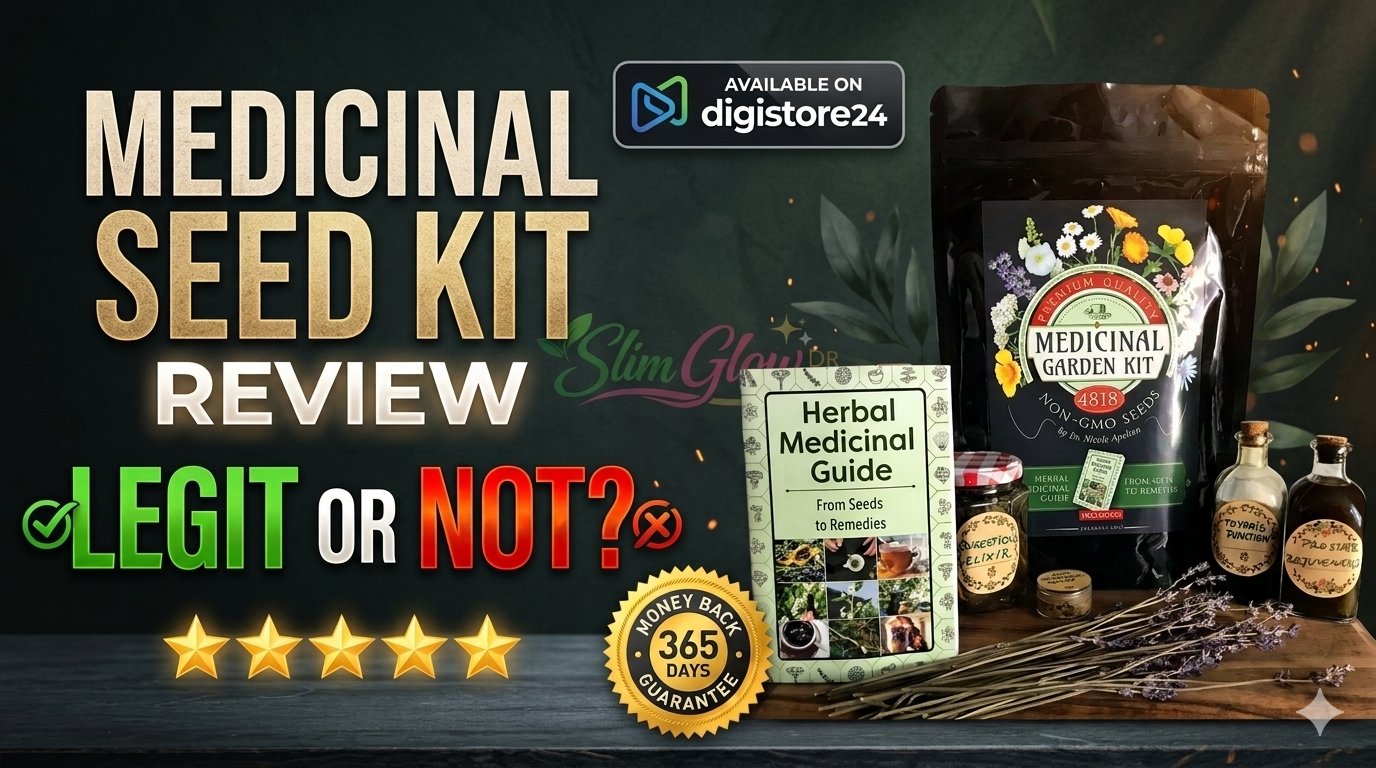
According to the official Medicinal Seed Kit page, the kit contains ten individually packaged seed varieties totaling 4,818 non-GMO seeds, packaged in the US: chicory, yarrow, California poppy, marshmallow, chamomile, evening primrose, lavender, echinacea, calendula, and feverfew. It also includes a printed herbal medicine guide book called "Herbal Medicinal Guide: From Seeds to Remedies," plus two bonus guides on using household items for home remedies and identifying wild edible and medicinal plants, each stated by the vendor to be worth $29 on its own.
One thing to flag: some third-party listings mention plant markers as part of the kit, but the official product page's own description of box contents doesn't mention them anywhere. That inclusion is unconfirmed, so don't count on labeled markers being in your box. A cheap set of garden labels is a reasonable backup to have on hand regardless.
The 10 Herbs Included and What They're Traditionally Used For
This is the section where hype-driven reviews tend to blur two very different claims together: what an herb has been used for traditionally, and what modern clinical research has actually confirmed.
Herb-by-Herb Rundown
[VISUAL PLACEHOLDER: Reference table listing each of the 10 herbs with its traditional use and a "traditional use, not clinically proven" hedge. - Alt text: Table of the 10 herbs in the Medicinal Seed Kit and their traditional uses.]
| Herb | Traditional Use | Evidence Snapshot |
|---|---|---|
| Chicory root | Folk use as a digestive aid and coffee substitute | Its inulin fiber has some legitimate gut-health research behind it, but broader claims (like pain relief) rest on a single small human trial and animal studies, per McGill's science-outreach article. |
| Yarrow | Wound care, digestive complaints, menstrual discomfort | Marketed for several unrelated uses at once,not supported by robust human trials. Commonly advised against in pregnancy |
| California poppy | Mild calming or sleep-support use | Modern human clinical research is sparse |
| Marshmallow root | Soothing throat and digestive irritation, largely due to its mucilage content | Mostly traditional-use evidence; limited modern trials |
| Chamomile | Relaxation, sleep support, mild digestive upset | Traditional and researched uses of chamomile show some evidence for mild calming effects, but overall research is limited, and it can interact with blood-thinning medication |
| Evening primrose | Skin conditions and hormonal-cycle discomfort | Traditional and researched uses of evening primrose note that evidence doesn't clearly support most of these traditional claims |
| Lavender | Relaxation and sleep support | Traditional and researched uses of lavender point to some evidence for mild anxiety support, but it isn't a substitute for treating a diagnosed condition |
| Echinacea | Used at the first sign of a cold | What the evidence actually shows about echinacea is mixed, and products vary a lot from one preparation to the next |
| Calendula | Topical use for minor skin irritation | Widely used traditionally; robust modern human trials are limited |
| Feverfew | Migraine prevention | Traditional and researched uses of feverfew suggest a possible modest benefit in some studies, but results are inconsistent |
None of these herbs are approved medical treatments, and growing them yourself doesn't change that. If you're managing a chronic condition, pregnant, breastfeeding, or taking prescription medication (chamomile's interaction with blood thinners is a good example of why this matters), talk to a clinician before using any home-grown herb medicinally, not just before buying the kit.
A Pharmacist's Note: Allergies, Interactions, and Pregnancy
As a pharmacist, what concerns me most isn't the seeds; it's how easily herbs get treated as harmless because they're "natural." Four things to know before you use anything you grow:
Daisy-family allergy. Six of the ten herbs (chicory, yarrow, chamomile, echinacea, calendula, and feverfew) belong to the Asteraceae family, which includes ragweed. If you react to ragweed or similar plants, be cautious handling and using them.
Medication interactions. Chamomile is the example flagged above, but evening primrose and feverfew are also commonly cited for interactions with blood-thinning drugs. Sedating herbs (California poppy, lavender, chamomile) can add to the effect of sleep aids, benzodiazepines, and alcohol, and marshmallow root's mucilage may slow the absorption of pills taken at the same time. Ask your pharmacist about your specific medications.
Pregnancy and breastfeeding. Feverfew and yarrow are the usual examples of herbs advised against in pregnancy. Don't use any of these medicinally without your clinician's okay.
Homegrown means undosed. A tea from your own plant has no standardized strength, and look-alike plants cause identification mistakes. Label everything, especially if the kit's plant markers turn out not to be included.
Chicory Root, Gut Health, and the Metabolic-Health Connection
Chicory root is the one herb in this kit that overlaps most directly with this site’s usual focus on gut and metabolic health, largely because of its prebiotic fiber content. Prebiotic fiber feeds beneficial gut bacteria, and a healthy gut microbiome is one piece of the broader picture researchers look at when studying digestion and metabolic health; prebiotic fiber's role in supporting gut and metabolic health covers in more depth.
That said, growing your own chicory root and drinking it as a tea or roasted-root beverage is a supportive habit at best, not a weight-loss shortcut. The human clinical evidence for chicory's broader health claims is thin, limited mostly to a single small trial and rodent studies, per the McGill article cited above. If you're interested in chicory for this reason, treat it the way you'd treat adding more fiber-rich vegetables to your diet: a reasonable, low-stakes addition to a broader routine, not a replacement for it.
Is the Medicinal Seed Kit Legit or a Scam?
Legitimacy and efficacy are two separate questions, and it's worth answering them separately instead of letting one bleed into the other. On the "does this exist and ship as a real product" question, the answer is yes: the kit is sold through a standard Digistore24 checkout, has a documented price and guarantee, and its creator has independently verifiable credentials. On the "do these herbs work the way some marketing implies" question, the honest picture is more measured, as the herb table above shows.
What Independent Reviews and Buyers Actually Report
Coverage of the kit online, including reviews and complaints readers post about their own orders, splits into two fairly different lanes. Consumer- and marketing-adjacent review sites tend to describe it as a legitimate product worth buying for the right kind of buyer, without reporting a meaningful pattern of complaints about non-delivery or damaged shipments. On the other hand, more skeptical, non-affiliate sources, most notably McGill University's Office for Science and Society, are considerably more critical of the health claims layered onto the herbs themselves, pointing out that yarrow, for example, gets marketed for menstrual cramps, digestive issues, burns, and varicose veins all at once, a breadth of claims that actual clinical evidence doesn't support.
Reading both lanes together, the picture is consistent rather than contradictory: this looks like a real product with no widely reported delivery problems in the sources checked, sold with more optimistic health framing around the herbs than the underlying research actually backs. That's a meaningfully different situation than an outright scam, and it's also different from a product whose every claim you should take at face value.
Counterfeit and Copycat Kit Warning
Seed sales are a category scammers like to imitate, and that risk deserves separate attention from the question of whether the Medicinal Seed Kit itself is legitimate. Consumer-safety reporting on seed-scam sites describes a consistent pattern: copycat storefronts promoted through spam and social media, unusually low prices paired with stolen product photos, and lookalike URLs that borrow an established brand's name. None of the sources reviewed for this article named a specific copycat site impersonating the Medicinal Seed Kit by domain, so treat this as a general category risk to watch for rather than evidence of a documented incident.
TheFTC's general guidance on avoiding online shopping scams is a useful practical checklist: search the seller's name plus words like "review," "complaint," or "scam" before buying, be wary of ads offering brand-name products at prices that seem too good to be true, and never pay a seller that insists on gift cards, wire transfers, or cryptocurrency. Paying by credit card, and buying only through the official product page or a link you trust, is the simplest way to avoid a lookalike site entirely.
Growing Timeline and Realistic Expectations
[VISUAL PLACEHOLDER: Simple growth timeline graphic showing the approximate 3 to 12 month range across the featured herbs. - Alt text: Timeline showing how long Medicinal Seed Kit herbs take to grow and become usable.]
How Long Until the Herbs Are Usable
If your goal is to grow your own medicine garden at home with this kit, timeline is the first expectation to set correctly: there's no version of this kit that gets you usable herbs in a week or two. Fast-germinating annuals like calendula and California poppy can be usable within a few months of a good growing season, while herbs like echinacea and marshmallow root, which are often grown as perennials, may take closer to a full year or longer to establish enough to harvest meaningfully. As a general rule, plan for a three to twelve month range depending on the herb, your climate, and your growing conditions, not a fixed number you can count on regardless of variety.
Either way, you're buying the starting point of a garden, not a finished remedy. Your USDA hardiness zone matters here: perennials like echinacea and marshmallow need to survive your winters, while annuals like calendula and California poppy don't have to.
Can a Total Beginner With No Gardening Experience Succeed?
Realistically, yes, but with caveats worth planning around rather than glossing over. Heirloom herb seeds are generally forgiving compared to finicky vegetable crops, and the included guide is meant to walk a first-time grower through the basics. The more common failure mode isn't that beginners can't germinate the seeds; it's that they underestimate the ongoing effort, inconsistent watering, insufficient sunlight, or simply losing track of which seedling is which once several herbs are growing close together (a real argument for keeping your own labeling system on hand if the kit's plant markers turn out not to be included).
A practical recommendation for a true beginner: start by planting two or three herbs you're most interested in using rather than all ten seed packets at once. That keeps the learning curve manageable and gives you a better shot at actually harvesting something useful in your first season, rather than spreading limited attention across ten varieties and losing several of them to inconsistent care.
Medicinal Seed Kit Price, Discounts, and Guarantee
Current Price and Any Coupon/Discount Codes
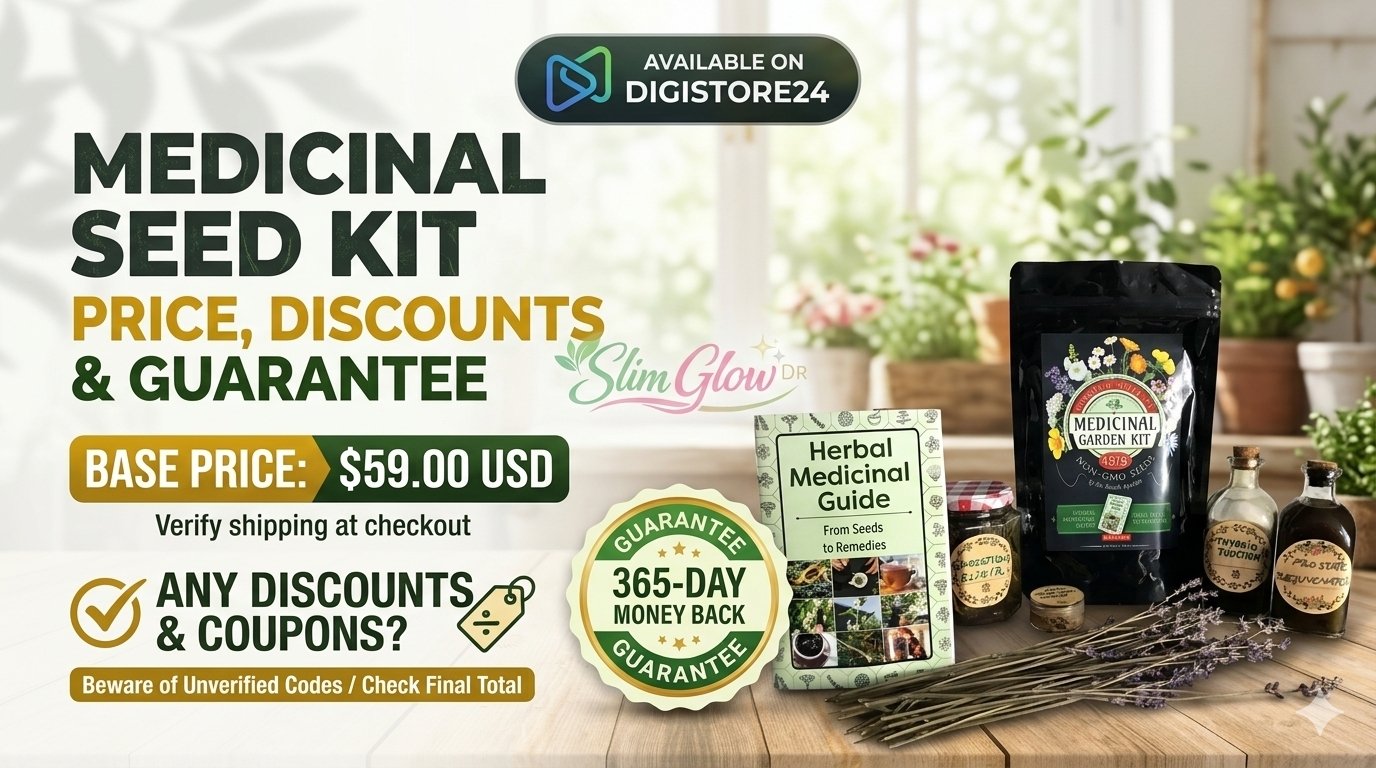
The kit's checkout, processed through Digistore24, lists a price of $59.00 USD. That figure is independently corroborated outside the brand's own marketing: McGill's Office for Science and Society reported the same $59 price point in a February 2025 article. Where things get less clear-cut is shipping. Shipping is where the numbers differ: one checkout showed free shipping, while another price check recorded $4.99 in shipping and handling plus location-based tax, which likely reflects different promotions or regions. The practical takeaway: expect about $59 as your base price, but confirm the shipping total shown at your specific checkout before completing the purchase, rather than assuming it will match what you've read elsewhere.
On discount codes, the honest answer is that no legitimate, verifiable coupon program was found for this product. Several thin, promotional-style sites advertise codes like "70% off," but none of that could be corroborated. If a code is showing up somewhere with no clear source, treat it skeptically rather than assuming it's real. Because prices, shipping fees, and promotions can change without notice, always confirm the final total shown at checkout before completing your order.
Money-Back Guarantee Terms Explained
The official product page states a 365-day money-back guarantee, described as "risk free." That headline figure is confirmed directly from the brand's own page, so you can rely on the 365-day window itself.
What isn't documented on the official site or the checkout page is the actual refund mechanics: who initiates the return, whether you need to send anything back, how long processing takes, or whether any fees apply. If the guarantee is a meaningful factor in your decision, it's worth reaching out to the seller directly before you buy to get those specifics in writing rather than assuming a best-case process.
One point in the guarantee's favor: 365 days is longer than most of these herbs take to establish, so you can grow a full season before deciding. Note that Digistore24 processes payment, but the vendor decides refund eligibility, so get the refund steps in writing before you buy.
Ready to see current pricing and the guarantee terms for yourself? You can check availability directly on the official Medicinal Seed Kit page.
Pros and Cons of the Medicinal Seed Kit
[VISUAL PLACEHOLDER: Two-column callout summarizing genuine pros and cons of the Medicinal Seed Kit. - Alt text: Pros and cons summary of the Medicinal Seed Kit.]
Pros
- Real, deliverable physical product with independently verifiable creator credentials
- Reasonable seed quantity and variety for the price, plus a printed guide and two bonus guides
- 365-day money-back guarantee gives buyers meaningful downside protection
- Good fit for people genuinely interested in gardening, homesteading, and herbal self-sufficiency
Cons
- Multi-month to full-year wait before most herbs are usable; no fast results
- Herb health claims lean on traditional use and preliminary animal or cell research rather than robust human clinical trials
- Shipping cost is inconsistent across checks ($0 vs. $4.99 plus tax), so your final total may vary
- Guarantee process details (return requirements, processing time) aren't publicly documented
- No independently disclosed refund or cancellation rate is available
- Requires genuine ongoing gardening effort and attention, not a passive, set-it-and-forget-it purchase
Is It Worth the Price?
At about $59, the fair comparison is buying ten seed packets and a herbal guide separately. Comparable organic seed packets from a specialty medicinal-seed retailer (chamomile, echinacea, marshmallow, feverfew, calendula, lavender, yarrow) run about $4-6 each, so buying ten packets separately would run roughly $45-55 before any guide is added; a comparable 17-variety organic medicinal-herb seed collection from an established seed company sells for about $40. So the $59 price mainly buys convenience, curation and the guide, not a discount on the seeds themselves. (Verify current prices before publishing; seed prices move.) Keep in mind that 4,818 seeds is far more than any home garden will use, so much of what you're paying for is the guide and the curated selection, not the seed count.
Final Verdict: Who Should (and Shouldn't) Buy the Medicinal Seed Kit
The Medicinal Seed Kit is a good fit for someone who genuinely wants to start growing their own herb garden, is comfortable with a multi-month to year-long payoff, and understands the herbs' benefits as traditional and supportive rather than clinically proven treatments. It's a reasonable pick for readers already interested in homesteading, DIY tinctures and teas, or simply reducing reliance on store-bought herbal supplements, especially with a 365-day guarantee acting as a safety net if it turns out not to be for you.
It's a poor fit for anyone expecting fast results, anyone hoping the herbs will treat or cure a diagnosed medical condition, and anyone unwilling to put in the ongoing gardening effort a real seed-to-harvest process requires. If that's you, your money and expectations are probably better matched elsewhere.
Conclusion
To bring this back to the plain question you likely came here with: the Medicinal Seed Kit is legitimate as a physical product, backed by a real creator with independently verifiable credentials, a documented price, and a 365-day guarantee, but it is not a fast or clinically proven health fix. Judge it as what it actually is: a self-sufficiency and gardening investment with a genuine, multi-month payoff and traditionally useful herbs, not a shortcut around actual health decisions.
As a reminder, this review contains an affiliate link; if you buy through it, slimglowdr.com may earn a commission at no extra cost to you. If you've read all of this and it sounds like the right fit for your goals, you can check current availability and pricing on the official Medicinal Seed Kit page. Still weighing it? Re-read the guarantee terms above before you decide, or browse more natural remedy guides if you'd rather explore a lower-commitment option first.
Key Takeaways
- The Medicinal Seed Kit is a real product that with no widely reported delivery problems in the sources checked, created around Dr. Nicole Apelian, whose herbalism and biology credentials check out independently outside the brand's own marketing.
- It includes 4,818 non-GMO seeds across 10 herb varieties, a printed guide, and two bonus guides; plant marker inclusion is unconfirmed.
- Expect a three to twelve month timeline before most herbs are usable; this is a gardening investment, not an instant remedy.
- Price is confirmed at about $59 with a 365-day money-back guarantee, but shipping cost and exact refund mechanics vary or remain undocumented, so confirm both at checkout.
- Every herb benefit in this kit should be understood as traditional or folk use, not clinically proven treatment; talk to a clinician before using any home-grown herb medicinally if you're pregnant, breastfeeding, or on medication.
***FAQs.docx***
Is the Medicinal Seed Kit legit or a scam?
It's a real, deliverable product, not a scam that simply takes your money without shipping anything: it's sold through a standard checkout process, and its creator's credentials check out independently of the brand's own marketing. Its herb health claims, though, should be understood as traditional use rather than clinical fact.
Does the Medicinal Seed Kit actually work?
As a gardening product, it should work if you give the seeds proper care, though germination rates aren't independently documented. Whether the resulting herbs deliver the specific health benefits sometimes implied in marketing is a separate question, and independent review of the evidence suggests most of those benefits rest on traditional use and preliminary research rather than robust human clinical trials.
How much does the Medicinal Seed Kit cost?
The confirmed base price is about $59.00 USD. Shipping cost has varied across checks, from $0 to roughly $4.99 plus location-based tax, so confirm your exact total at checkout rather than assuming one fixed number.
What herbs/seeds are included in the Medicinal Garden Kit?
The kit includes chicory, yarrow, California poppy, marshmallow root, chamomile, evening primrose, lavender, echinacea, calendula, and feverfew, totaling 4,818 non-GMO seeds.
Who is Dr. Nicole Apelian, and is she a real herbalist?
She's a wilderness living skills instructor with a master's degree in biology from the University of Oregon and a PhD from Prescott College, known publicly for appearing on the survival show "Alone." She teaches ethnobotany as adjunct faculty and has spoken about her multiple sclerosis diagnosis motivating her interest in herbal remedies; these credentials are corroborated by independent sources, not just brand marketing.
Is there a discount code or coupon for the Medicinal Seed Kit?
No legitimate, verifiable discount code was found. Some third-party sites advertise codes like "70% off," but these claims couldn't be corroborated, so treat them with skepticism.
What is the refund/money-back policy?
The official product page states a 365-day money-back guarantee. The specific refund process, including how to initiate a return and whether the physical kit needs to be sent back, isn't publicly documented, so it's a good idea to confirm those details directly with the seller before purchasing if that matters to your decision.
Can a beginner with no gardening experience grow this kit successfully?
Generally yes. Heirloom herb seeds tend to be forgiving, and the included guide covers the basics. A practical approach for a first-time grower is to start with two or three herbs rather than all ten at once, to keep the learning curve manageable.
Are the seeds non-GMO and safe?
Yes, the official product page states the seeds are non-GMO and packaged in the US. "Non-GMO" says nothing about how safe an herb is to use, though: that depends on your health, medications, and dose (see the pharmacist's note above).
How long does it take for the herbs to grow and be usable?
It varies by herb, generally in the range of three to twelve months. Fast-growing annuals like calendula mature sooner, while herbs often grown as perennials, like echinacea, typically take closer to a year to establish.
Can these herbs support weight loss, digestion, or metabolism?
Chicory root's prebiotic fiber content has some connection to gut health, which is one factor in broader metabolic health, but this should be understood as a supportive habit, not a proven weight-loss or metabolism outcome. None of the herbs in this kit are clinically proven weight-loss treatments.