
Written by Dr. Kaneez Fatima, Pharm-D. Safety information sourced from NCCIH and Memorial Sloan Kettering Cancer Center · Last updated November, 2026
Affiliate disclosure: This article contains affiliate links. If you buy through them, slimglowdr.com may earn a commission at no extra cost to you. That doesn't change my assessment, which is based on the vendor's published information and independent research.
If you've seen Herbs for Health advertised, you're probably asking more than whether $27.99 is a fair price. Maybe you're working on your weight, trying to keep your blood sugar steady, dealing with bloating, or sleeping badly, and an organized guide to natural remedies sounds like a sensible place to start. I wrote this Herbs for Health review to help you decide whether it's worth it, with medication safety front and center.
Two things to know up front. First, the product is now sold as The Herbal Remedy Companion, a bundle of three e-books. Second, this is a research-based review, not a hands-on one. I built it from the vendor's own sales materials and from independently published research. I haven't read or used the e-books, so I won't comment on the writing, layout, or recipes.
Below, you'll find what's in the bundle, who is behind it, how the evidence holds up for the herbs it highlights, the safety issues that matter if you take medication, and how it compares with other herbal remedy books.
Quick answer: Is Herbs for Health legit? It's a real $27.99 bundle of three PDFs, now sold as The Herbal Remedy Companion, with a 60-day refund according to the sales page. Its listed contents suggest a broad herbal reference for beginners, but it's written under a pen name with no verifiable clinical authority, and the evidence for many of its herbs is mixed. Treat it as a starting reference, not as medical care or a weight-loss plan.
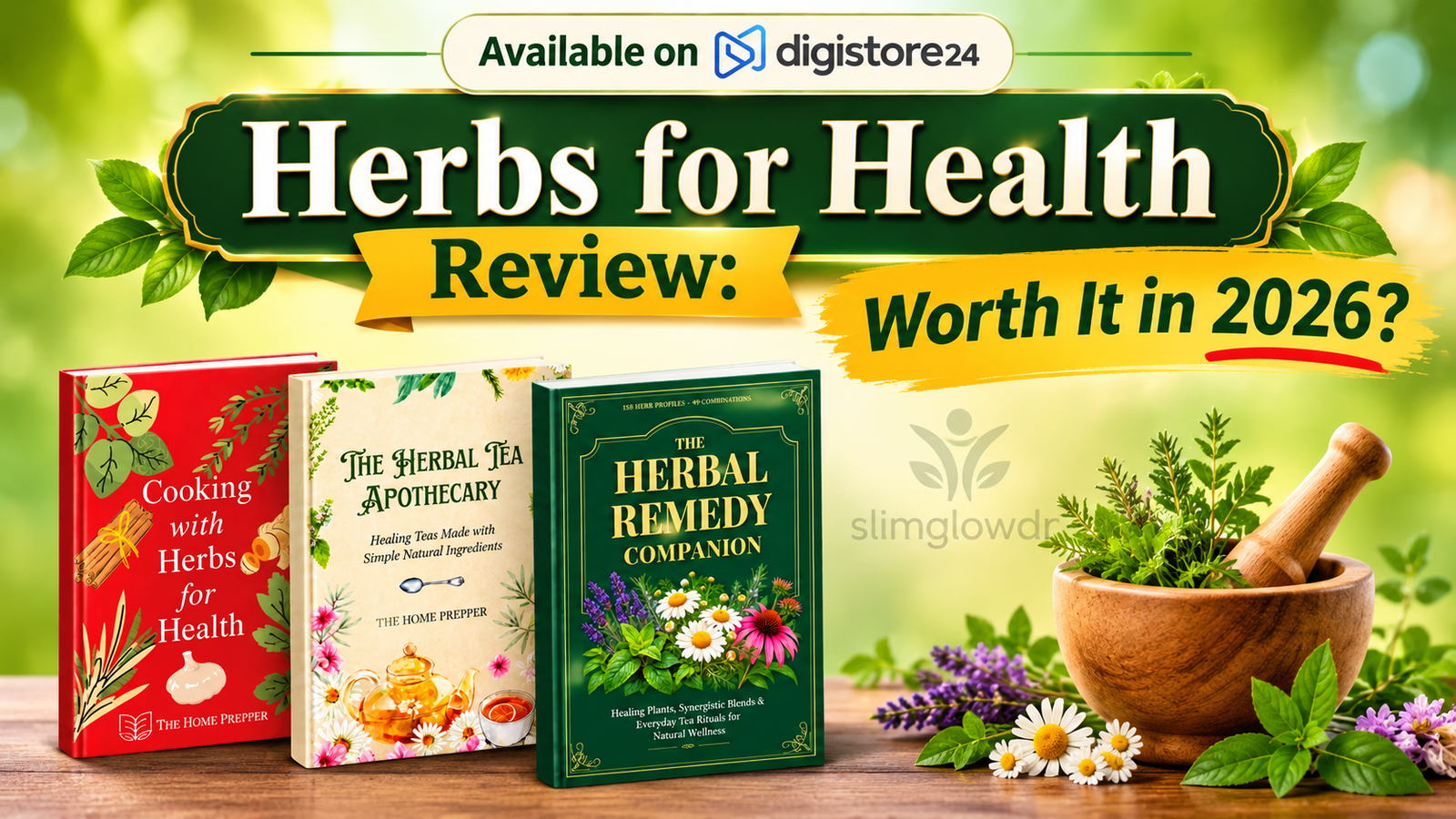
[VISUAL PLACEHOLDER: Vendor-supplied bundle cover image showing the three e-book covers side by side. Alt text: "Herbs for Health bundle covers: The Herbal Remedy Companion, Cooking with Herbs for Health and The Herbal Tea Apothecary"]
Key Takeaways
- Evidence: support for the featured herbs runs from promising to weak, and herbs aren't a meaningful weight-loss tool.
- Safety: if you take any prescription medication, check with a pharmacist or doctor before trying any herb in it.
- Best fit: beginners who want a broad herbal reference, not a treatment plan.
How I Researched This Herbs for Health Review
In November, 2026, I reviewed the live Herbs for Health sales page, the vendor's affiliate page, and the Digistore24 order form. I then checked the herbs the sales page highlights against independent sources: the National Center for Complementary and Integrative Health (NCCIH), systematic reviews and meta-analyses, and the original studies the sales page cites where I could read them. For most studies I read the published abstract and, where it was freely available, the full text; where a detail appeared only in secondary summaries, I left it out.
I didn't buy or read the e-books. Every figure about the product's contents (page counts, herb profiles, recipes) is the vendor's claim as of that date, and I label it that way. I also didn't treat the customer testimonials on the sales page as evidence, because they can't be verified and don't tell you how a remedy performs across many people.
When sources disagreed, I gave more weight to systematic reviews than to single trials, and more weight to randomized controlled trials than to anecdotes. That's the same order of trust I'd suggest you use when you read any herbal guide, including this one.
Herbs for Health at a Glance
Product details as stated on the vendor's sales page, as of November, 2026. Check the current page before buying, since details may change.
| Product name(s) | Herbs for Health (marketing name); The Herbal Remedy Companion (current sales name) |
| Vendor | The Home Prepper |
| Author | "Vivian Greene" (the sales page calls this a pen name and author persona) |
| Format | Digital bundle of 3 PDFs (instant download), or the main guide as an Amazon paperback |
| Price | $27.99, one payment, no subscription (PDF bundle); paperback also listed at $27.99 |
| What's included | The Herbal Remedy Companion (264 pages), Cooking with Herbs for Health (73 recipes), The Herbal Tea Apothecary (50+ tea blends) |
| Refund | 100% refund within 60 days on request (digital bundle only); paperback returns go through Amazon |
| Checkout | Processed by Digistore24 |
| Where to buy | the official Herbs for Health sales page |
Herbs for Health or The Herbal Remedy Companion? Why the Two Names
The vendor, The Home Prepper, markets the product to affiliates as Herbs for Health, which is the name you'll see in most ads. Click through, though, and the sales page sells it as The Herbal Remedy Companion ebook, with two bonus e-books included. They're the same purchase, so a Herbal Remedy Companion review and a Herbs for Health review are describing the same bundle.
The naming isn't the only source of confusion. Older third-party reviews describe versions with different numbers, such as "39 remedies" or "50+ herbs," and different bonus packages. That suggests the product has been revised over time. This review describes only the version on the sales page as of October 29, 2026.
A practical rule: if a review you're reading quotes contents or bonuses that don't match the current sales page, assume it describes an older edition and rely on what the page shows on the day you buy.
What's Inside the Herbal Remedy Companion Bundle
According to the sales page, the Herbs for Health ebook bundle includes:
- The Herbal Remedy Companion: the 264-page main guide
- Cooking with Herbs for Health: a bonus recipe book
- The Herbal Tea Apothecary: a bonus book of tea blends
Here's what the vendor says each one contains.
The Herbal Remedy Companion (Main Guide)
The sales page lists 158 herb profiles, 49 herb combinations, a three-page "Symptom Finder" covering 70 symptoms and concerns, 254 references, and "Kitchen Notes" sections. The page also cites published studies on several herbs, including turmeric with black pepper, tea tree, and rosemary, along with European Medicines Agency traditional-use entries. I didn't verify those studies, so I'm not counting them as evidence here.
A reference list is a good sign, but its length tells you little about quality. If you buy the guide, look at what each claim actually rests on. A large randomized trial in people carries far more weight than a lab study on cells or a traditional-use listing, and many herbal claims rest on the latter two.
Cooking with Herbs for Health (Bonus)
The first bonus offers 73 recipes, according to the sales page. A cooking-first approach is arguably the most sensible way to bring herbs into your routine. Culinary amounts are generally lower risk than concentrated extracts: NCCIH, for example, describes cinnamon as likely safe in the amounts used in food. Cooking with herbs can also make healthy meals more appealing, which may matter more for long-term eating habits than any single ingredient.
The Herbal Tea Apothecary (Bonus)
The second bonus, The Herbal Tea Apothecary ebook, covers more than 50 herbal tea blends, per the vendor. Teas and infusions can be a pleasant, low-cost habit, and a warm cup in the evening may help replace a less helpful snack or drink.
Teas still aren't automatically harmless, though. Two herbs discussed later, hibiscus and licorice, can affect blood pressure. So if you take blood pressure medication, ask your pharmacist about any blend you plan to drink every day.
PDF Bundle vs. Amazon Paperback
The sales page offers two formats at the same $27.99 price:
- Digital bundle: all three PDFs, instant download, covered by the 60-day refund.
- Amazon paperback: 264 pages, 8.25 x 11 inches, full color, according to the sales page. It contains the main guide only, without either bonus book, and returns go through Amazon's policy.
If you want the recipes and tea blends or the vendor's refund, the PDF bundle is the better value. If you'd rather flip through a printed reference and don't care about the bonuses, the paperback may suit you better. If you like paper, you could buy the PDF bundle and print only the pages you use most. It's worth flagging this difference, since the matching price makes it easy to assume the two formats are equivalent.
Who Is Vivian Greene? A Note on the Author
This is where the sales page differs most from typical herbal marketing. It says plainly: "Vivian Greene is the author's persona and pen name used in these guides."
The page tells the story of a woman with insulin resistance who was prescribed metformin and became interested in herbs. The vendor adds its own disclaimer: "Her narrative introduces the book's approach; it is not a clinical case history or evidence that a remedy works." That candor is welcome, and you should read the story as framing rather than proof.
The vendor's affiliate materials say that "experienced herbalists, licensed dieticians, and medical doctors have all played a part" in creating the guide. No individual is named, and the page is signed "The Home Prepper team." I couldn't verify anyone's involvement or credentials.
Why it matters: with a named, credentialed author, you can look up their training, publications, and reputation. With The Herbal Remedy Companion's Vivian Greene, you can't, so the book's credibility rests entirely on how accurately it reports its sources. That doesn't make it a bad book. It does mean you should check important claims yourself.
What Does the Evidence Say About the Herbs It Features?
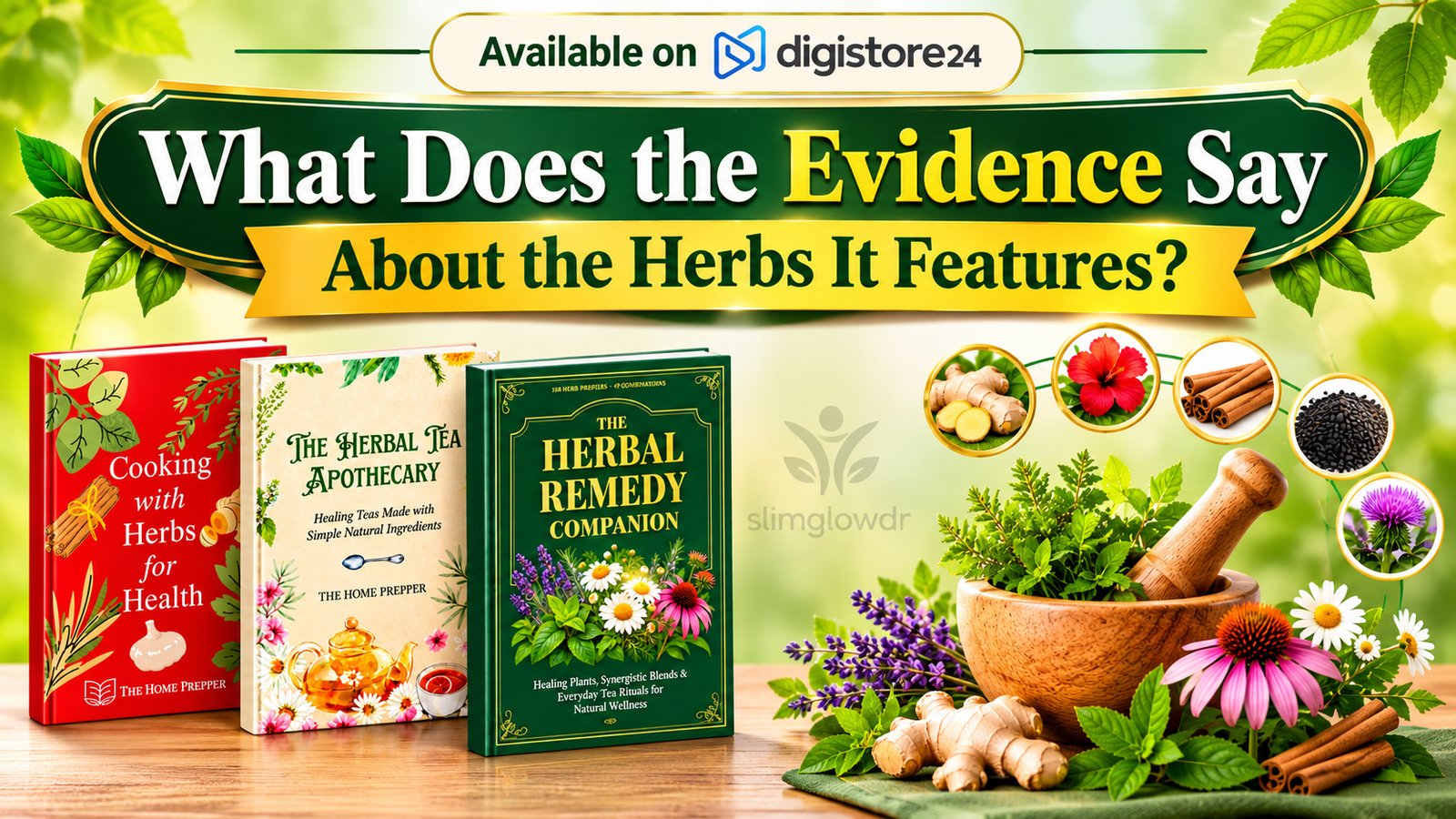
The sales page highlights several herbs, some of them alongside a specific study. Below, I compare each claim with independent research, including NCCIH's Herbs at a Glance fact sheets where they exist.
Ginger for Migraine
The sales page points to a study comparing ginger with sumatriptan, a prescription migraine drug. That study is real: a randomized trial comparing ginger with sumatriptan in 100 adults with common migraine found that both reduced headache severity within two hours to a similar degree, with fewer side effects in the ginger group.
The limits are important. It's a single trial from a single center, and it looked only at treating an attack, not preventing them. NCCIH's ginger fact sheet doesn't cover migraine at all, and overall the evidence rests on a small number of small trials.
Safety note: ginger can cause stomach discomfort, heartburn, and diarrhea. NCCIH advises talking with a provider before using it if you take any medicine. Don't swap a prescribed migraine medication for ginger without your doctor's input.
Hibiscus Tea and Blood Pressure
The sales page cites a six-week trial of hibiscus tea in 65 adults with prehypertension or mild hypertension who I'm not taking blood pressure medication. Drinking three cups a day lowered systolic blood pressure more than placebo, though the difference in diastolic pressure wasn't significant.
Broader research on hibiscus tea and blood pressure supports a modest effect. A 2022 meta-analysis of 13 randomized trials with 1,205 participants found average reductions versus placebo of 6.67 mm Hg systolic and 4.35 mm Hg diastolic. The effect was significant in people with high blood pressure alone, but not in those who also had metabolic syndrome, a detail worth noting if you're managing weight and blood sugar as well. Hibiscus wasn't shown to outperform blood pressure drugs, and the authors called for longer trials. NCCIH has no hibiscus fact sheet.
Safety note: if you take blood pressure medication, ask your pharmacist whether daily hibiscus tea could add to its effect. Never stop or reduce blood pressure medication on your own.
Valerian and Hops for Sleep
The sales page cites a four-week trial in which a valerian and hops combination shortened the time it took to fall asleep compared with placebo, while valerian alone didn't. That matches the published study, which tested one proprietary combination product, so the result may not apply to other preparations.
The wider picture is weaker. NCCIH's valerian fact sheet calls the sleep evidence "inconsistent" and notes that the American Academy of Sleep Medicine's 2017 guideline suggests against using valerian for chronic insomnia (a weak recommendation). A 2010 meta-analysis of 18 trials found that people reported sleeping better, but objective measures didn't improve. If sleep is part of your weight story, you may also want to read our review of the Sleep Hacking Method.
Safety note: NCCIH says valerian shouldn't be combined with alcohol or sedatives. Side effects can include headache, upset stomach, and vivid dreams; rare liver injury has been reported, mostly with multi-herb products. Safety in pregnancy is unknown.
DGL Licorice for Heartburn
The sales page cites a trial of DGL licorice for heartburn, and it notes that the result doesn't extend to ordinary licorice root tea. In that trial, 200 adults took a specific branded deglycyrrhizinated licorice (DGL) extract or placebo for 28 days. The DGL group reported better quality of life, and their heartburn and regurgitation resolved sooner. It was one trial at one center, using one product.
NCCIH says it's "unclear" whether licorice-only products help digestive symptoms.
Safety note: the difference between DGL and regular licorice matters. According to NCCIH's licorice safety notes, glycyrrhizin in regular licorice can cause serious effects on heart rhythm and blood pressure with large or long-term intake, and even smaller amounts may be risky for people with high blood pressure, heart disease, or kidney disease. NCCIH says DGL products "might be safe for up to 4 months." If you try it, check that the label says deglycyrrhizinated.
Cinnamon and Black Seed for Blood Sugar
This section matters most if you're managing blood sugar or weight, so I'll be direct. No herb should replace metformin or any other diabetes medication. If you take a glucose-lowering drug, discuss any herb with your doctor before trying it and keep monitoring your blood sugar, since the effects could combine.
The sales page doesn't cite a cinnamon study; cinnamon appears in a recipe. Independent evidence is unconvincing. A Cochrane review of cinnamon and blood sugar research covering 10 trials and 577 participants found insufficient evidence to support cinnamon for diabetes, and NCCIH's cinnamon fact sheet says research doesn't clearly support it for any condition. Cassia cinnamon contains coumarin, which raises liver concerns with prolonged high intake. Memorial Sloan Kettering Cancer Center's About Herbs database also flags possible concerns with some diabetes drugs and statins, based largely on animal data and isolated reports, so ask your pharmacist before using cinnamon supplements.
The black seed study the sales page cites wasn't about blood sugar. The allergy study the sales page cites tested black seed oil plus piperine for seasonal allergy symptoms over 15 days. It had no oil-only comparison, and its authors were affiliated with the ingredient's maker, as the page acknowledges. For blood sugar, a 2022 review of black seed trials (11 trials, 666 adults) found lower average fasting glucose and HbA1c, but rated the certainty low to very low, with highly inconsistent results across trials.
Milk Thistle and Digestion/Liver Claims
Here the sales page itself calls the evidence limited or conflicting. NCCIH's milk thistle fact sheet agrees: there isn't enough high-quality evidence to draw firm conclusions for liver disease, and two NCCIH-funded trials, in hepatitis C and in nonalcoholic steatohepatitis, found no benefit.
Safety note: milk thistle's most common side effects are digestive, including bloating, nausea, and gas, which is worth knowing if bloating is why you're interested in it. People allergic to ragweed, daisies, marigolds, or chrysanthemums may react to it. NCCIH also reports that some products contain different amounts of the active compound than their labels state, and some have been contaminated.
Evidence Summary: Featured Herbs
| Herb | Use examined in this review | Strength of independent evidence | Key safety or interaction note |
|---|---|---|---|
| Ginger | Migraine (study cited on the sales page) | Limited: one 100-person trial vs sumatriptan; few small trials | Stomach upset; check with a provider if you take medication; don't swap prescribed migraine drugs |
| Hibiscus tea | Blood pressure (study cited on the sales page) | Promising but modest: meta-analyses of small, short trials; not shown better than BP drugs | Ask your pharmacist whether it could add to BP medication; never stop BP drugs |
| Valerian (+ hops) | Sleep (study cited on the sales page) | Mixed to weak: NCCIH calls it inconsistent; AASM 2017 weakly suggests against it for chronic insomnia | Not with alcohol or sedatives; rare liver injury; pregnancy safety unknown |
| DGL licorice | Heartburn (study cited on the sales page) | Limited: one 200-person trial of a branded extract; NCCIH: unclear | Regular licorice can raise BP and affect heart rhythm; DGL is different |
| Cinnamon | Blood sugar (no study cited by the vendor) | Insufficient or unclear (Cochrane 2012; NCCIH 2024) | Cassia coumarin and liver; ask your pharmacist about diabetes drugs and statins; never replace diabetes medication |
| Black seed | Blood sugar (the vendor's cited study was on allergies) | Limited, low to very low certainty (2022 meta-analysis) | Never replace diabetes medication |
| Milk thistle | Liver, digestion | Limited or conflicting (NCCIH; vendor agrees) | Digestive side effects including bloating; ragweed-family allergy; product quality varies |
| Coleus / forskolin | Weight, body composition | Weak or inconsistent: small trials; 2020 review recommended no herbal medicine for weight loss | Not a weight-loss solution |
Ratings reflect the independent sources cited above.
Can Herbs Help You Lose Weight? An Honest Look
The sales page is cautious on this point: "The book discusses weight management with mixed evidence, rather than promising a particular amount of weight loss." Independent research supports that caution.
Take coleus (forskolin), which the sales page discusses. In one 12-week trial of 30 overweight and obese men, forskolin was linked to lower body fat compared with placebo, though the sales page notes that body weight didn't clearly change. A similar 12-week trial in mildly overweight women found no significant difference in body weight or fat mass.
The bigger picture comes from a 2020 review of 54 trials on herbal weight-loss remedies. The researchers found "insufficient evidence to recommend any of the herbal medicines" they studied for weight loss. Most statistically significant results were too small to be clinically meaningful, which the authors defined as at least 2.5 kg. A few herbs did better, but only in three or fewer small, poor-quality trials, so the authors urged caution.
So if weight loss is your main reason for considering this bundle, adjust your expectations. Any value is more likely to come from habits: swapping sugary drinks for unsweetened tea, or cooking flavorful meals at home more often. For a fuller breakdown, see our guide to what the evidence says about herbs for weight loss.
Safety First: Herb-Drug Interactions and Who Should Be Careful
The vendor's own disclaimer is the right starting point: "For educational use. These guides do not replace medical care." It also warns that "Herbs can have side effects and interact with medicines" and advises checking with a pharmacist or doctor. NCCIH puts it more bluntly in its guide to using dietary supplements wisely: "natural" doesn't always mean "safe."
What I know about herbal remedies and drug interactions. According to NCCIH guidance on herb-drug interactions, many interactions listed in current sources are hypothetical, based on animal or lab studies. The concern is most serious for drugs with a narrow therapeutic index, such as warfarin and digoxin, where small changes in blood levels can cause harm. St. John's wort is the best-known example: it speeds up the enzymes that break down many drugs, which can weaken antidepressants, birth control pills, warfarin, and others, according to NCCIH's St. John's wort fact sheet.
One finding is especially relevant for this audience: NCCIH reports that in a 2021 study of healthy adults, goldenseal lowered metformin levels by about 25%. I don't know whether the book covers goldenseal; the point is that interactions can affect common drugs. Because the evidence on specific combinations is often limited, a pharmacist check matters more, not less.
Supplement quality. The Herbal Remedy Companion is a book, but if it leads you to buy supplements, know that by law the FDA doesn't approve dietary supplements before they're marketed. You can read more about how the FDA regulates dietary supplements. As the milk thistle example shows, labels and contents don't always match.
With a Pharm-D background, the interaction question is where I'd press hardest, so here are the three questions I'd ask before adding any herb to a medication routine. First, does the herb act on the same body system as my drug, such as blood pressure, blood sugar, clotting or sedation? Second, is my drug one where small changes in blood levels matter, like warfarin or digoxin? Third, am I using a food-level amount, such as a cup of tea, or a concentrated extract? Yes to the first two means call the pharmacist before the first dose. The third matters because safety at tea strength doesn't carry over to capsules.
Check with your doctor or pharmacist first if you:
- Take diabetes medication, such as metformin, or blood pressure medication
- Take a blood thinner such as warfarin, or a heart medicine such as digoxin
- Take several prescription medicines
- Are pregnant or breastfeeding (NCCIH notes many supplements haven't been tested in pregnancy)
- Have surgery coming up (some supplements can affect bleeding or anesthesia, so tell your surgical team well in advance)
- Have liver or kidney disease
A practical step: write down every herb, tea, and supplement you use or plan to try, including the daily tea blends, and take the list to your pharmacist. NCCIH's free HerbList app is a handy way to look up an herb's safety notes before that conversation. Never stop or change a prescription without the doctor who prescribed it.
Pros and Cons
Pros
- Broad coverage: 158 herb profiles, according to the sales page
- A Symptom Finder for quick lookups
- A reference list (254 references, per the vendor)
- Low one-time price with no subscription
- 60-day refund on the digital bundle
- Honest about the pen name and about "mixed evidence" on weight
- Recipe and tea bonuses suit a practical, food-first approach
Cons
- Pen-name author, with no named credentialed contributors
- Mixed or weak evidence for many featured claims, including weight management
- The paperback doesn't include the bonuses
- Testimonials on the sales page can't be verified.
- It can't replace individualized medical advice
Who Herbs for Health Is For (and Who Should Skip It)
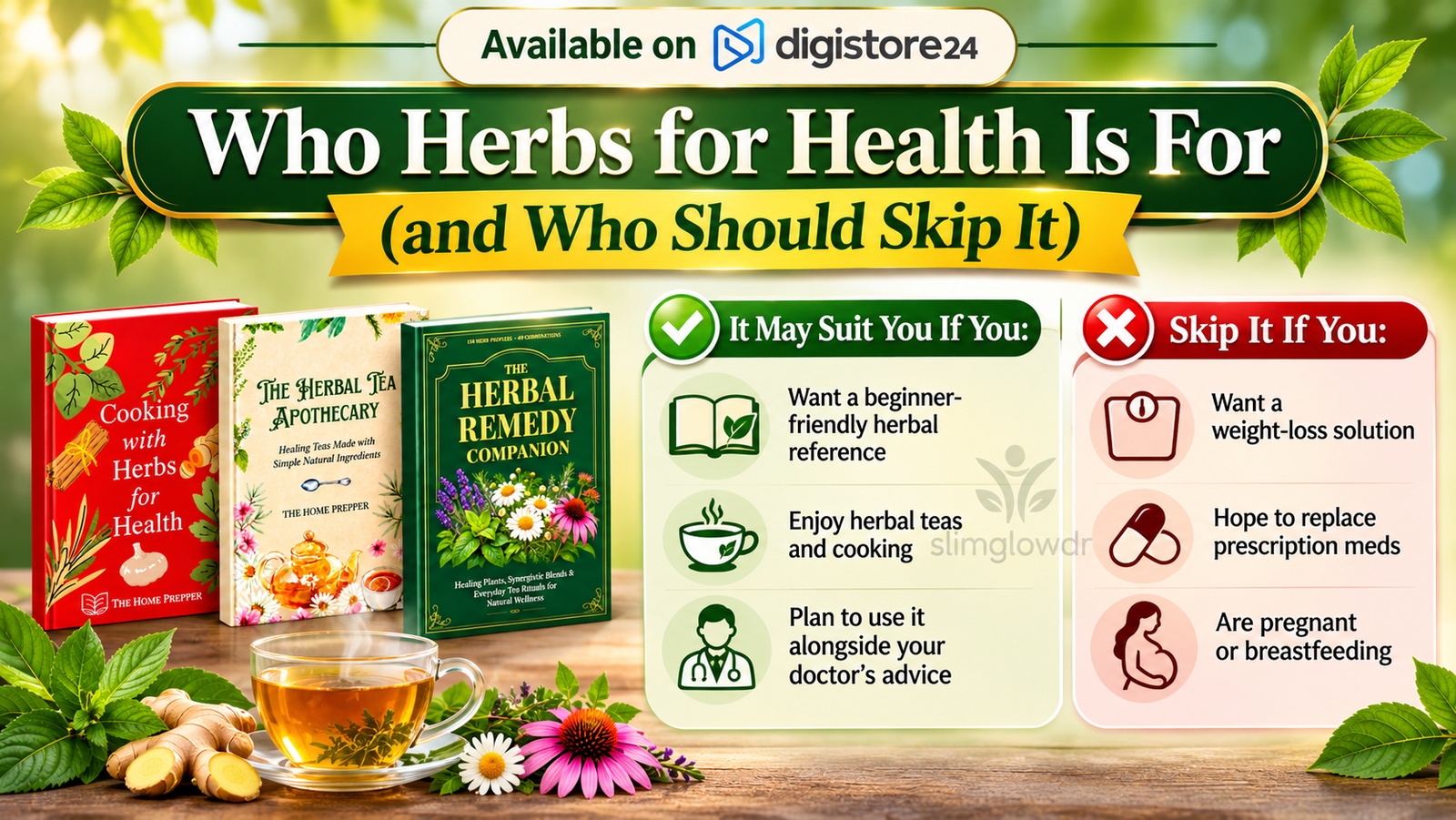
It may suit you if you:
- Are a curious beginner who wants a low-cost herbal reference that, per the vendor, includes a symptom finder
- Enjoy herbal teas and cooking, and want ideas for both (if you'd like to grow your own, here's our review of a medicinal seed kit for growing your own)
- Plan to use it alongside your doctor's advice rather than in place of it
Skip it, or check with your doctor first, if you:
- Want a weight-loss solution
- Hope to replace diabetes, blood pressure, or heart medication with herbs
- Take anticoagulants or several prescriptions and haven't spoken to a pharmacist
- Are pregnant or breastfeeding
- Want material written by a named, credentialed clinician or herbalist
The deciding factor for most readers is how you'll use it. As a browsing reference that prompts better questions for your doctor, it's low risk for the price. As a guide to self-treating a diagnosed condition, it's the wrong tool, and the vendor says as much.
How It Compares With Other Herbal Remedy Books
If you're comparing herbal reference books for beginners, it helps to see Herbs for Health next to established alternatives. The biggest difference is authorship: the alternatives below have named authors whose backgrounds you can check.
| Resource | Author (credentials) | Best for |
|---|---|---|
| Herbs for Health / The Herbal Remedy Companion | "Vivian Greene" (pen name; no named experts) | Broad, low-cost reference with recipe and tea bonuses |
| Rosemary Gladstar's Medicinal Herbs: A Beginner's Guide | Rosemary Gladstar, herbalist | Beginners who want to grow and use a small set of herbs |
| Herbal Medicine for Beginners | Katja Swift and Ryn Midura, herbalists and co-founders of the CommonWealth Center for Holistic Herbalism | Beginners who want practical remedies from named practitioners |
| NCCIH Herbs at a Glance | U.S. government (National Institutes of Health) | Checking evidence and safety for a specific herb |
Gladstar's and Swift and Midura's books cover fewer herbs, but their authors are established, named herbalists. NCCIH's free resource is the one to keep bookmarked whatever you buy, since it focuses on evidence and safety rather than recipes, although it doesn't cover every herb (hibiscus, black seed, hops, and forskolin aren't included). If you want a broader home-medicine reference, see our review of The Home Doctor practical guide. The fair summary is this: Herbs for Health offers more breadth per dollar, and the alternatives offer more accountability.
Price, Refund Policy and What to Know Before You Buy
As of October 29, 2026, the sales page lists the digital bundle at $27.99 as a single payment with no subscription. The PDFs are delivered instantly after purchase, and checkout is processed by Digistore24.
The refund promise comes from the sales page: a 100% refund within 60 days on request, covering the digital bundle only. The Digistore24 order form links to its general terms rather than restating the 60-day promise, so I suggest saving a screenshot of the guarantee and your receipt with the purchase date.
On additional offers: the vendor's affiliate materials refer to other offers in the sales funnel. When I checked, the order form showed the two free bonus guides and no paid add-ons, but I couldn't see what appears after purchase. Read each page carefully before adding anything, and don't assume an extra offer comes with the same refund terms.
If it sounds like a fit, you can check the current price and 60-day refund policy on the vendor's page before deciding.
Final Verdict: Is Herbs for Health Worth It?
Is Herbs for Health legit? Real, yes; authoritative, not verifiably. It's a low-cost digital product sold through Digistore24, with a stated 60-day refund window, but no named, credentialed expert stands behind it. The sales page admits the author is a pen name, that her story isn't evidence, and that the weight-management evidence is mixed. That honesty is the minimum, not a credential.
Its value depends on how you use it. As an organized reference that sparks ideas for teas, meals, and better questions for your doctor, it looks reasonable for $27.99. As a treatment plan or a weight-loss tool, it falls short, because the evidence behind its headline herbs ranges from promising (hibiscus) to weak (valerian, cinnamon, forskolin). That's the bottom line of this Herbs for Health review: a useful starting point, not a substitute for care.
If you take any prescription medication, especially for diabetes, blood pressure, or blood clotting, talk to your pharmacist or doctor before trying any herb from it, and never change a prescription on your own.
If that fits what you're looking for, see what's included in Herbs for Health . If you decide it isn't for you, start with these simple, sustainable habits that support your metabolism instead.
About the author: Dr. Kaneez Fatima holds a Pharm-D degree and has clinical practice experience. She writes evidence-based health content for slimglowdr.com and checks supplement and herbal claims against NCCIH, systematic reviews and primary research before recommending anything.
Frequently Asked Questions
Is Herbs for Health legit?
It's real, but not a verified authority. The bundle is a genuine digital product sold through Digistore24 with a 60-day refund on the digital bundle, according to the sales page. That makes it a legitimate purchase, but legitimacy isn't the same as reliability. The author is a pen name, no credentialed contributors are named, and the evidence for many of its featured herbs is mixed. Treat it as an educational reference.
What's included in the Herbs for Health bundle?
The digital bundle includes three PDFs, according to the sales page as of October 29, 2026: The Herbal Remedy Companion (264 pages, 158 herb profiles, 49 combinations, and a 70-symptom Symptom Finder), Cooking with Herbs for Health (73 recipes), and The Herbal Tea Apothecary (50+ tea blends). It costs $27.99 as a single payment.
Who wrote The Herbal Remedy Companion?
The guide is credited to "Vivian Greene," which the sales page describes as an author persona and pen name. The vendor, The Home Prepper, says herbalists, dietitians, and medical doctors helped create it, but it names none of them. I couldn't verify any contributor's identity or credentials.
Is Herbs for Health a PDF or a physical book? Does the paperback include the bonuses?
Both formats exist. The digital bundle is three PDFs for $27.99 with instant download and a 60-day refund. A paperback of the main guide is also listed on Amazon at $27.99, but according to the sales page it doesn't include the two bonus books, and returns follow Amazon's policy.
Does Herbs for Health have a money-back guarantee?
Yes, for the digital bundle. The sales page promises a 100% refund within 60 days on request. The Digistore24 order form doesn't restate that promise, so save a screenshot of the guarantee and your receipt. Paperback purchases are handled under Amazon's return policy instead.
Can the herbs in Herbs for Health help with weight loss?
Probably not in any meaningful way. A 2020 review of 54 trials found insufficient evidence to recommend any herbal medicine for weight loss, and the vendor itself describes the weight-management evidence as mixed. The bundle's tea and recipe ideas may support healthier habits, which is where any realistic benefit lies.
Can I use herbs instead of my diabetes or blood pressure medication?
No. Don't stop, reduce, or replace diabetes or blood pressure medication without your doctor. None of the herbs I reviewed, and no herbal remedy I am aware of, has evidence strong enough to replace prescribed diabetes or blood pressure treatment, and some may combine with your medication's effects. If you want to try an herb alongside it, ask your doctor first and keep monitoring your readings.
Are herbal remedies safe to take with prescription medications?
Not always. Some herbs can change how drugs work; St. John's wort, for example, can weaken many medications. NCCIH says the risk is highest with narrow-therapeutic-index drugs such as warfarin and digoxin. Because evidence on many specific combinations is limited, ask your pharmacist to check every herb and supplement you take.