

Meet Maya: A Story About Beauty
Before we give tips and routines, here is a short story to set the stage.
Maya was 14 years old. Every morning, she stood in front of the mirror and felt completely lost.
Her mom had a shelf full of creams and serums. Her older sister had a whole drawer of makeup. But Maya had no idea where to start.
One day, she tried her sister's foundation. It was the wrong shade. She looked like she was wearing a mask. Everyone at school noticed. She wanted to disappear. She stopped trying. And she told herself beauty wasn't for her.
Then one afternoon, her teacher said something that stuck. She said, "Beauty is not about looking like someone else. It is about taking care of yourself gently, honestly, and every day."
That weekend, Maya washed her face with a simple cleanser. She patted it dry. Then she added a light moisturizer. Finally, she put on sunscreen. Just three steps. She did the same thing the next day. And the day after that.
After a few weeks, her skin looked cleaner. More importantly, she felt confident. Not because she looked like a model. But because she had learned the most powerful beauty secret of all: beauty starts with knowledge, not with expensive products.
This guide is for everyone who uses Maya. Whether you are 14 or 44, just starting out or starting over, this is your place to begin.
Maya's story shows us something important. First, beauty can feel confusing and overwhelming. However, once you understand the basics, everything becomes much simpler. So let us start from the very beginning.
The Global Beauty Industry: Market & Growth
The sales of beauty products via online channels are expected to increase to one-third of global beauty retail sales by 2030.
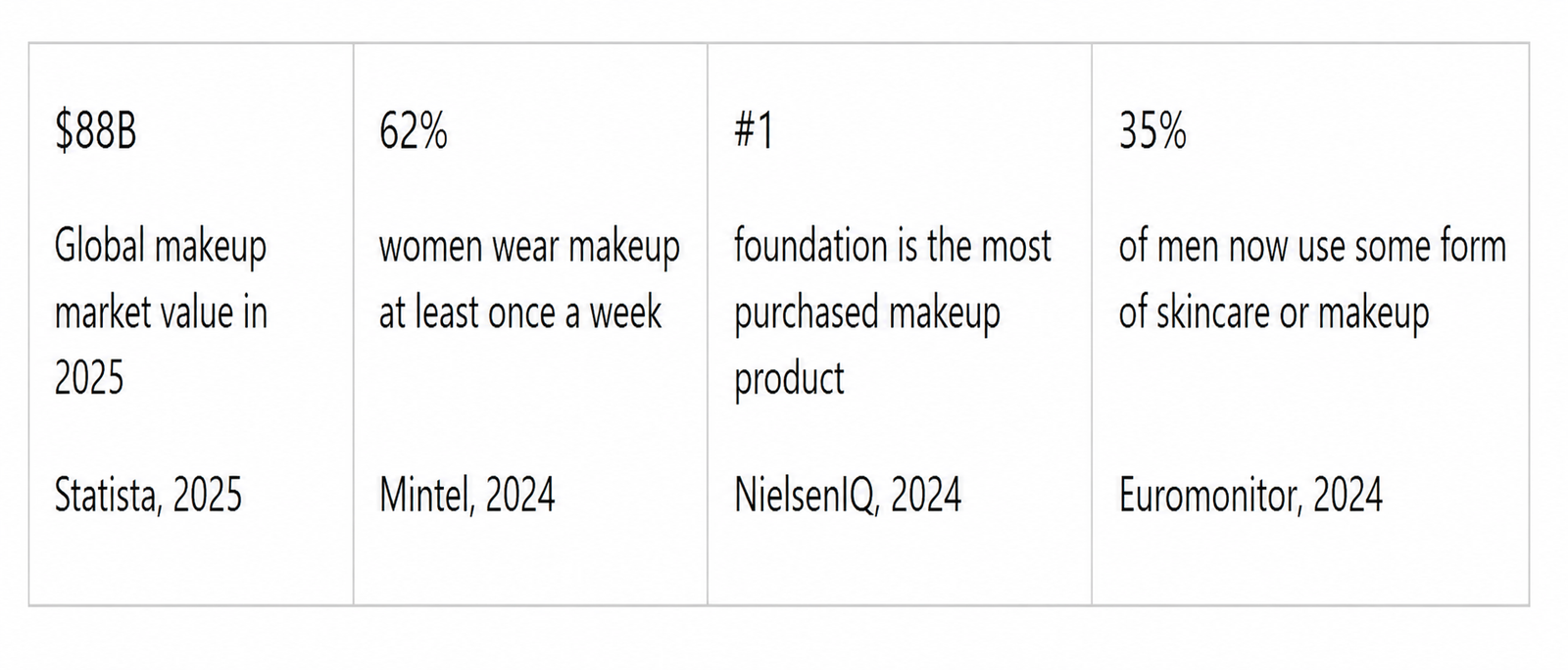
The global wellness industry is now worth over $6 trillion, which is nearly ten times the size of the beauty market alone. This tells us one powerful thing: true beauty starts from within. Skincare and makeup matter, but sleep, nutrition, stress management, and exercise matter even more.
What Is Beauty?
For a long time, beauty meant looking young, thin, and perfect. However, that idea is changing fast. Today, beauty means something much bigger, bolder, and more honest.
In other words, beauty now includes how you take care of yourself. It includes how you feel on the inside. It also includes how you choose to express who you are. As a result, beauty is deeply personal. It looks different for every person.
For example, one person's beauty routine might be a 10-step Korean skincare ritual. Another person might be washing their face and adding sunscreen. Both are completely valid. Both are beautiful. Therefore, there is no single right way to do this.
Because beauty is so personal, this guide will not tell you what to look like. Instead, it will give you the facts, the science, and the simple tools to build YOUR beauty routine. So let us get started.
Know Your Skin Type
Before you buy a single product, you need to know one thing: your skin type. This is the most important step in all of skincare. Why? Because using the wrong product for your skin type can cause breakouts, dryness, or irritation, even if the product is famous and expensive.
Fortunately, there are only five main skin types. Moreover, they are easy to understand once you know what to look for:
- Normal skin feels balanced. Not too oily. Not too dry. Few visible problems.
- Oily skin looks shiny, especially on the nose, forehead, and chin. Pores appear larger.
- Dry skin feels tight or flaky. It looks dull. Needs extra moisture to feel comfortable.
- Combination skin, oily in the center of the face, drier on the sides. This is the most common skin type.
- Sensitive skin gets red or irritated easily. Reacts to many products and ingredients.
How to Find Your Skin Type at Home (The Bare-Face Test)
Try the bare-face test. According to the American Academy of Dermatology, this is the most reliable DIY method:
First, wash your face with a gentle cleanser. Next, pat it dry. After that, wait 60 to 90 minutes without putting anything on your skin. Finally, look in a mirror and observe what you see:
- Does your face feel tight and look flaky? → Dry skin
- Does your whole face look shiny and oily? → Oily skin
- Is only your nose and forehead shiny? → Combination skin
- Does your face feel comfortable and normal? → Normal skin
- Is your face red, itchy, or burning? → Sensitive skin
Good to know: Your skin type is not fixed forever. It can change with the seasons, your age, your hormones, and even your diet. So check in with your skin every few months and adjust your products as needed.
Skin Tone vs. Skin Type
Here is something many people mix up. Your skin type is about oil and water levels. Your skin tone is about color, from fair to deep. Both things matter when choosing skincare and makeup. Together, they help you make smarter, more personal beauty choices.
Building Your Skincare Routine
Now that you know your skin type, it is time to build your routine. Here is the best news: you do not need 20 products. A simple routine done every day will always beat a long routine done sometimes. According to dermatologists at the AAD, consistency is what makes the real difference. And 79% of people say a consistent routine improved their skin.
Your Morning Routine
- Gentle cleanser: Wash away any oil and sweat from the night. Use a soft, soap-free cleanser. For oily skin, try a gel formula. For dry skin, try a cream or milk cleanser.
- Toner (optional): This step helps balance your skin after washing. Choose one without alcohol. Look for helpful ingredients like hyaluronic acid or niacinamide on the label.
- Vitamin C serum: This is your morning superpower. It brightens skin, fades dark spots, and protects against pollution damage. As a result, your skin looks more glowing over time. Research from Dermato-Endocrinology confirms its antioxidant benefits.
- Eye cream: The skin under your eyes is very thin and delicate. Therefore, it needs special care. Use your ring finger to tap a small amount gently under each eye.
- Moisturizer: Always moisturize, even if your skin feels oily. Oily skin still needs water. Use a light lotion if you are oily. Use a richer cream if you are dry or have combination skin.
- Sunscreen SPF 30+: This is the single most important step in any beauty routine. Apply it every morning, every day, even indoors. Also, on cloudy days. We will explain exactly why in the next section.
Your Evening Routine
At night, your skin shifts into repair mode. Consequently, this is the best time to use your most active and powerful products.
- Double cleanse: Start with an oil-based cleanser to dissolve sunscreen and makeup. Then follow with a gentle water-based cleanser for a deeper, thorough clean.
- Exfoliant (2 to 3 times per week only): This step removes dead skin cells. For instance, glycolic acid (an AHA) smooths surface texture. Salicylic acid (a BHA) clears out pores. However, never use both on the same night. Additionally, do not exfoliate every day. Learn more at the AAD's exfoliation guide.
- Treatment serum: This is where your special active ingredients go. For example, retinol helps with fine lines and aging. Niacinamide helps with pores and redness. Vitamin C helps with dark spots and uneven tone.
- Night moisturizer: Seal in all those good ingredients with a nourishing night cream. Look for ceramides on the label. They repair and protect your skin while you sleep.
Want Glowing Skin from the Inside Out?
A great skincare routine works even better when you nourish your skin from within. youtric® beauty365 gives your skin the vegan collagen, amino acids, and Vitamin C it needs to look younger and feel stronger in just 1 scoop a day.
Try youtric® beauty365: Check Price & Order
Skincare Ingredients Decoded
Walk into any beauty store, and you will see hundreds of products with long, confusing ingredient lists. It can feel overwhelming. However, the good news is that you only need to know a handful of ingredients that science has truly tested and proven. Everything else is mostly marketing.
Here is a clear, simple breakdown of the ingredients that deliver real results and two that you should use very carefully.
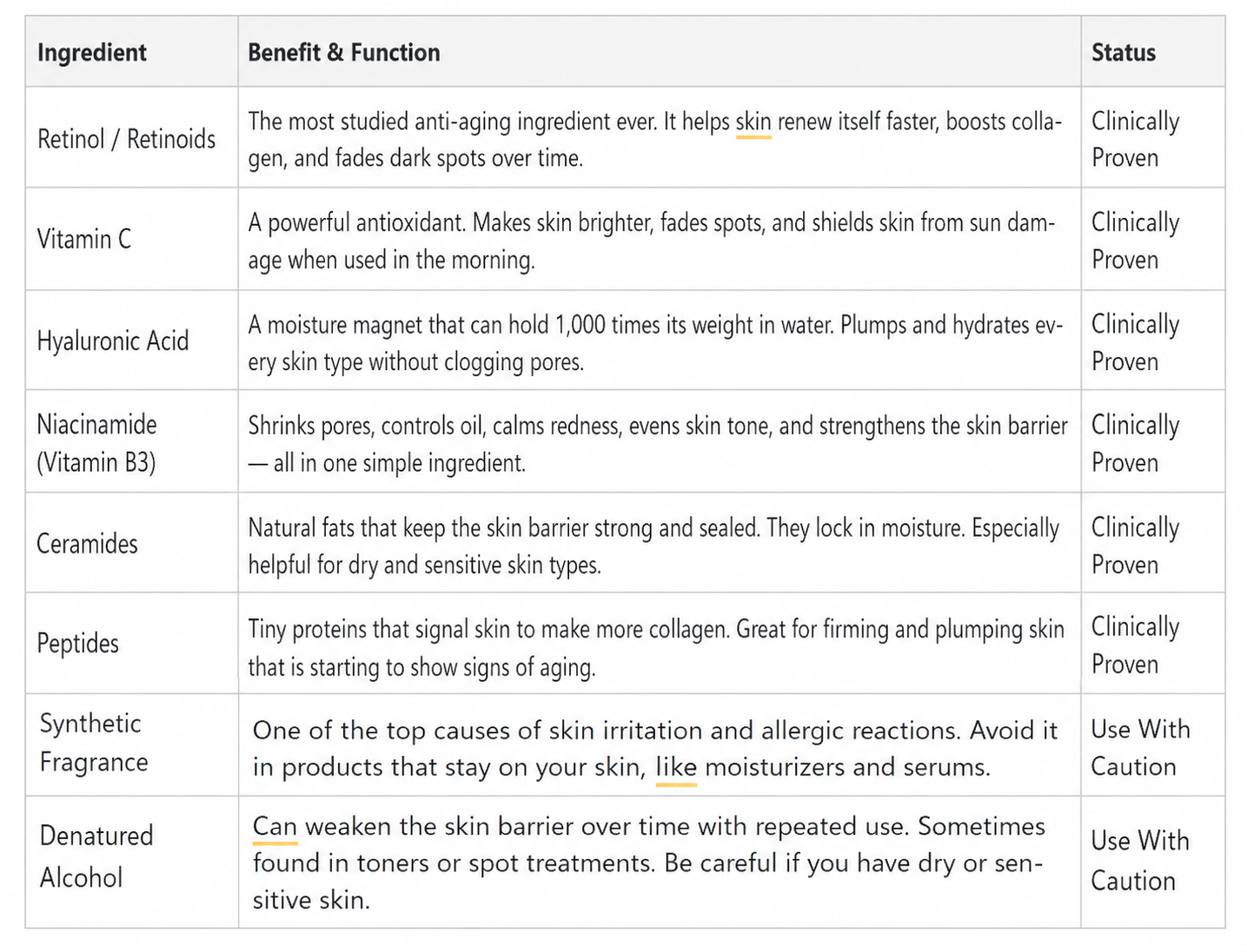
Speaking of key ingredients, collagen-supporting nutrients like amino acids, Vitamin C, and Biotin are just as important as what you put on your skin. That is exactly what youtric® beauty365 delivers in one daily scoop. It works from the inside out, supporting your body’s own collagen production naturally and without animal ingredients.
Sun Protection & Anti-Aging
Here is a fact that surprises most people. Up to 90% of the wrinkles, dark spots, and sagging you see on aging skin come from the sun, not from simply getting older. This is called photoaging. And the best way to prevent it is to use sunscreen every single day.
Furthermore, sunscreen also protects against skin cancer. So it is not just a beauty product, it is a health product. Therefore, skin doctors worldwide call it the single most important anti-aging step you can take. For more, see the AAD's anti-aging guide.
How to Pick the Right Sunscreen
- Choose SPF 30 or higher: SPF 30 blocks about 97% of harmful UVB rays. SPF 50 blocks about 98%. Learn more at the Skin Cancer Foundation.
- Look for 'broad spectrum' on the label: This means it protects against both UVA rays (aging) and UVB rays (burning).
- Mineral sunscreen (zinc oxide or titanium dioxide): Sits on top of skin and reflects rays away. Best choice for sensitive or reactive skin types. See the AAD's sunscreen guide.
- Chemical sunscreen: Absorbs into skin and converts UV rays to heat. Lighter in texture. Easier to wear under makeup every day.
Reapply every 2 hours when outside and right after swimming or sweating heavily.
Skin doctors worldwide agree on this: "The best anti-aging product ever invented is sunscreen if used consistently, every single day, starting as young as possible."
What Else Can Slow Down Skin Aging?
In addition to sunscreen, the most effective anti-aging approach combines three things. First, wear a Vitamin C serum in the morning to fight free radical damage. Next, use a retinoid (like retinol) at night to boost cell renewal. Finally, always apply SPF during the day to prevent new damage. Together, these three steps protect, repair, and renew your skin at the same time.
Moreover, professional treatments like chemical peels, microneedling, and laser therapy can tackle deeper concerns. However, it is important to remember that these work best as a boost to your daily routine, not a replacement for it. For more, see the AAD's anti-aging guide.
Here is something many people do not know:
Your skin produces less collagen every year after your 20s. By age 40, collagen levels can drop by up to 30%. That is one big reason why wrinkles and sagging appear. youtric® beauty365 is designed to support your body’s collagen production from within, using a vegan amino acid blend that gives your skin the building blocks it needs. Combined with your daily SPF routine, it is a powerful 2-step anti-aging approach.
Hair Care Science: Healthy Hair from Root to Tip
Just like your skin, your hair has specific needs. And just like skincare, the right approach starts with understanding what you are working with. Once you know your hair type and how it handles moisture, everything else becomes much clearer and simpler.
What Is Hair Porosity? (And Why It Matters)
Porosity is simply how easily your hair absorbs and holds onto water. It is one of the most useful things to know about your hair. Here is a simple breakdown:
- Low porosity: Hair does not absorb water easily. However, once it is in, it stays well. Use light, liquid-based products that will not build up on your strands.
- Medium porosity: Hair absorbs and holds moisture easily. Most products work well for this type.
- High porosity: Hair absorbs water fast but loses it just as quickly. Often caused by heat or chemical damage. As a result, use richer, heavier products to seal moisture in.
Try this at home: Drop a clean hair strand into a glass of water. If it floats: low porosity. If it sinks slowly: medium porosity. If it sinks fast: high porosity. Then choose your products accordingly.
Simple Rules for Healthier Hair
- Start with your scalp: Healthy hair grows from a healthy scalp. First, use a gentle sulfate-free shampoo. Also, address dandruff or excess oil before focusing on your hair length.
- Condition from the middle down: Apply conditioner from mid-shaft to the ends. Avoid the scalp area. Furthermore, use a deep conditioning mask once a week for dry or chemically treated hair.
- Always use heat protection: Before using any hot tool, such as a blow dryer, flat iron, or curling wand, apply a heat protectant. Look for products that protect up to 450 degrees F (230 degrees C).
- Trim regularly: Get a trim every 8 to 12 weeks. This stops split ends from traveling further up the hair shaft and causing more damage over time.
- Balance protein and moisture: Hair needs both. Too much protein makes it stiff and brittle. Too much moisture makes it limp. Consequently, balance is the key to strong, healthy hair.
How to Support Hair Growth
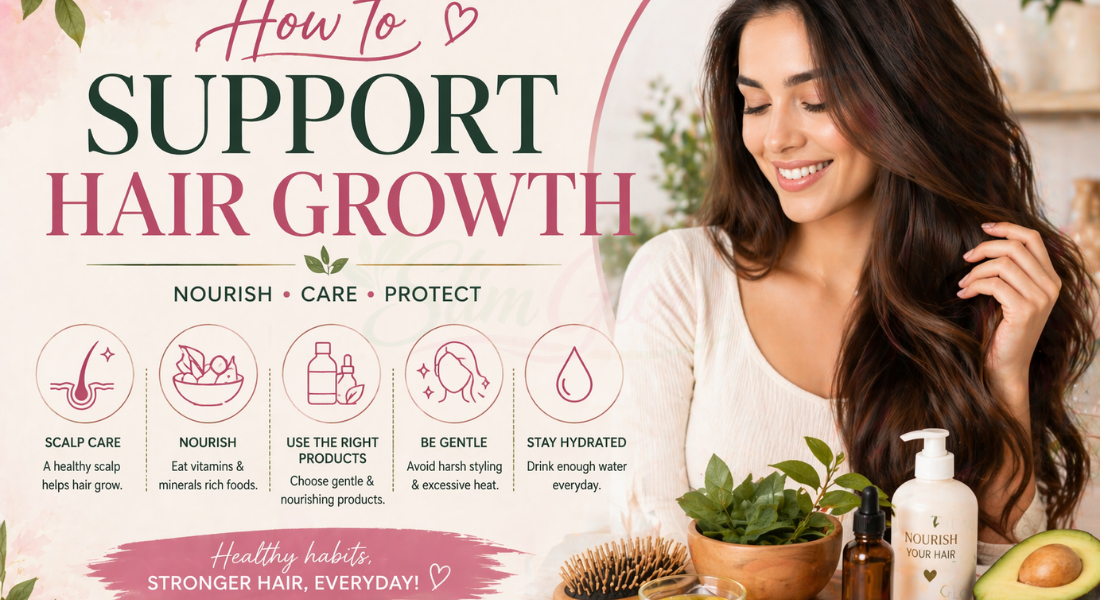
Hair growth mostly depends on your genes and your hormones. However, you can still support it. For example, regular scalp massage may help by increasing blood flow to hair follicles. Additionally, ingredients like rosemary oil, minoxidil (clinically proven), and caffeine-based shampoos may help slow hair loss. If you are losing a lot of hair suddenly, talk to a doctor; it could be linked to nutrition or hormones.
About 30–35% of hair loss cases are linked to nutritional deficiency. That is why what you eat matters so much for your hair and nails. youtric® beauty365 contains D-Biotin (Vitamin B7),a vitamin specifically known to support healthy hair growth and strong nails. It is a simple daily habit that works from the inside out.
Makeup & Complexion Basics: For Every Skill Level
Makeup is many things at once. It is an art. It is a confidence tool. It is a form of self-expression. Most importantly, it is for everyone regardless of your age, skin tone, or experience level. You do not need to be a professional to look great. You simply need to know the basics.
How to Find Your Perfect Foundation
Foundation is one of the most purchased and most returned beauty products in the world. That is because many people buy the wrong shade or formula. Here is how to avoid making that same mistake:
- Coverage level: Sheer (skin tint) looks most natural. Medium coverage hides more. Full coverage gives a smooth, even, polished finish.
- Finish type: Matte controls shine and works well for oily skin. Satin is natural-looking and flattering for most. Dewy gives a glowy, healthy appearance perfect for dry skin.
- Shade matching: Always test foundation on your jawline, not on the back of your hand. Check the color in natural daylight, not under store lighting.
- Formula for your skin: Water-based formula for oily skin. Oil-based or serum foundation for dry skin. Mineral powder for sensitive or reactive skin types.
The Right Order to Apply Makeup
Applying makeup in the right order makes a noticeable difference in how long it lasts and how natural it looks. Here is the simple sequence to follow:
- Primer: Apply first to smooth your skin and help makeup stick longer throughout the day.
- Color corrector (if needed): Green neutralizes redness. Orange or peach covers dark circles, especially on medium to deep skin tones.
- Foundation, then concealer: Apply foundation all over first. Then dot concealer only on blemishes and under your eyes. Blend using a damp makeup sponge for the most natural result.
- Setting powder: Dust lightly over your T-zone and under-eye area to help your makeup stay in place for hours.
- Bronzer, contour, and blush: Apply in this order to add warmth, shape, and color to your face naturally.
- Highlight, eye makeup, and lip color: Finish with these steps last. Then lock everything in with a setting spray for a long-lasting, fresh look.
Body Care & Wellness
Most people focus all their beauty efforts on their face. However, your body deserves just as much attention. After all, skin covers your entire body, not just your face. So let us talk about some simple, effective habits to care for it.
Key Body Care Habits to Start Today
- Exfoliate your body: Use a body scrub or loofah 2 to 3 times per week. You can also use a body lotion with AHA (alpha hydroxy acid) for gentler chemical exfoliation. As a result, your skin feels smoother and absorbs moisturizer much better.
- Moisturize right after showering: Apply your body lotion or oil within 3 minutes of getting out of the shower. Your skin is still slightly damp, which helps lock in moisture more effectively.
- Know the difference between deodorant and antiperspirant: Deodorant covers body odor. Antiperspirant stops sweat. Natural deodorants have improved greatly. Look for ones with magnesium or zinc for the best odor protection.
- Care for your nails: Use cuticle oil regularly to keep nails flexible and healthy. Note that brittle nails can sometimes signal low biotin or iron, so good nutrition matters here too.
- Protect your lips: Lips have no sweat glands or built-in sun protection. Therefore, use an SPF lip balm during the day and a nourishing lip mask at night to keep them soft and protected.
Nutrition, Sleep & Inner Beauty: The Foundation No Product Can Replace
Here is the honest truth: no cream in the world can fully make up for a poor diet, chronic stress, or lack of sleep. Your skin is a direct reflection of your overall health. In other words, what goes into your body shows up on the outside. So let us look at the inner factors that matter most.
Eat for Your Skin
The link between your gut and your skin is real. Scientists call it the gut-skin axis. What you eat can either help or hurt your skin every single day. So here is what to focus on:
- Omega-3 fatty acids (found in fish, walnuts, and flaxseed): These reduce inflammation inside the body. As a result, skin conditions like acne and eczema can improve noticeably over time.
- Antioxidant-rich foods (berries, leafy greens, green tea): These fight damage from the sun and pollution. Therefore, your skin ages more slowly and looks brighter.
- Collagen-boosting nutrients: Vitamin C from citrus fruits, zinc from pumpkin seeds, and protein from eggs help your body build its own collagen naturally from the inside out.
- Stay hydrated: Proper hydration supports every single function in your body. Drinking plenty of water will cure dry skin and keep skin cells healthy and bouncy.
- Limit sugar and dairy if you are acne-prone: Research from the American Academy of Dermatology shows a low-glycemic diet can reduce acne severity by up to 50%. However, everyone is different, so pay attention to your own skin's reactions.
Sleep: Your Free Overnight Treatment
While you sleep, your body does incredible work. It repairs damaged skin cells, releases growth hormones, and resets your stress levels. In short, sleep is the most powerful beauty treatment available, and it costs nothing at all.
Studies show clearly that people who sleep fewer than 6 hours a night have more visible wrinkles, darker under-eye circles, and duller skin overall. On the other hand, those who sleep 7 to 9 hours every night tend to have better skin texture and faster skin recovery. Furthermore, sleeping on a silk pillowcase can reduce friction, helping both your skin and your hair look better in the morning.
Manage Your Stress: Your Skin Will Thank You
When you feel stressed, your body releases a hormone called cortisol. Cortisol increases oil production (which can cause breakouts), speeds up collagen breakdown (which leads to faster aging), and weakens the skin barrier. Consequently, managing stress is genuinely one of the best beauty habits you can develop.
Simple habits that help include: a short daily walk, 5 minutes of deep breathing, journaling, yoga, or a warm bath before bed. In addition, regular exercise improves blood flow to the skin, which gives you a natural, healthy glow that no highlighter can fully recreate.
Beauty Across Ages & Skin Tones
Beauty is not the same for every person. Your skin changes as you get older. Additionally, different skin tones have different needs and different strengths. Understanding these differences helps you make smarter, more personal choices, no matter where you are on your beauty journey.
What Your Skin Needs at Every Stage of Life
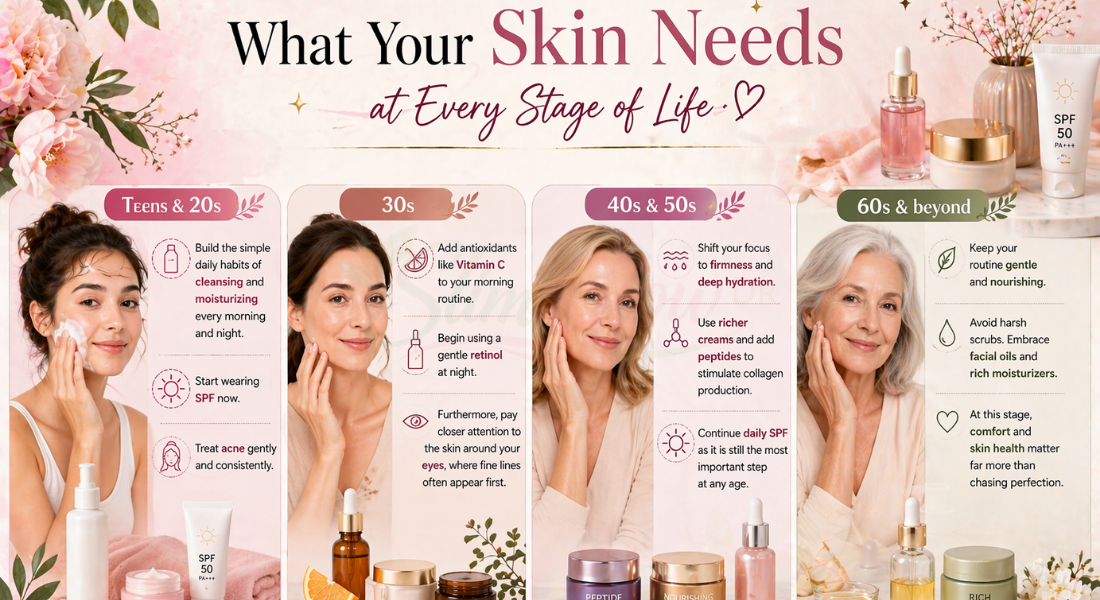
- Teens and 20s:Build the simple daily habits of cleansing and moisturizing every morning and night. Start wearing SPF now. Treat acne gently and consistently.
- 30s: Add antioxidants like Vitamin C to your morning routine. Begin using a gentle retinol at night. Furthermore, pay closer attention to the skin around your eyes, where fine lines often appear first.
- 40s and 50s: Shift your focus to firmness and deep hydration. Use richer creams and add peptides to stimulate collagen production. Continue daily SPF as it is still the most important step at any age.
- 60s and beyond: Keep your routine gentle and nourishing. Avoid harsh scrubs. Embrace facial oils and rich moisturizers. At this stage, comfort and skin health matter far more than chasing perfection.
Special Tips for Deeper Skin Tones
Deeper skin tones are beautiful and naturally resilient. They contain more melanin, which provides some built-in sun protection. However, they are also more likely to develop dark spots after any kind of skin irritation or inflammation. Doctors call this post-inflammatory hyperpigmentation, or PIH for short.
Therefore, if you have a deeper skin tone, it is especially important to avoid harsh physical scrubs that can irritate your skin. Start any retinol product at the lowest possible concentration and build up slowly. Additionally, use brightening ingredients like niacinamide and azelaic acid to keep your skin tone even and glowing. Always patch-test new products first. And when seeking professional treatments, look for providers who have real experience working with melanin-rich skin.
Building Your Personal Beauty Routine: Your Simple Starting Point
You have read the guide. So now what? The answer is simple: start small and stay consistent. You do not need to do everything at once. In fact, trying to do too much too quickly is one of the most common and most costly beauty mistakes people make.
Instead, begin with the basics. Then, add new steps slowly as your routine becomes a comfortable habit.
Your Daily Non-Negotiables
- Every morning: Gentle cleanser → Moisturizer → Sunscreen SPF 30 or higher
- Every evening: Double cleanse → Treatment serum → Night moisturizer
- Once or twice a week: Gentle exfoliation, a hair conditioning mask, and rich body moisturizer after body exfoliation.
- Daily inner beauty habit: 1 scoop of youtric® beauty365, add water, shake, enjoy. Supports skin, hair, nails, and joints from within.
When You Feel Overwhelmed: Simplify Everything
If you can do just ONE thing today: wear sunscreen.
If you can do THREE things: cleanse, moisturize, and apply SPF.
If you are ready to go further, add a Vitamin C serum in the morning and a retinol at night. For a step-by-step guide on how to layer these, visit the AAD's skincare basics page.
Remember: Most skincare products take 4 to 12 weeks to show real results. So do not give up after just one week. Good skin is built slowly, not overnight. Patience is one of the most underrated beauty tools of all.
When to See a Skin Doctor
This guide is a wonderful starting point. However, some skin concerns truly need professional attention. For example, if you have severe or painful acne, significant hair loss, unusual moles, or a rash that will not clear up, please see a board-certified dermatologist. A skin doctor can give you personalized advice that no guide, no app, and no product can ever fully replace.
Final Thoughts: Your Beauty Journey Starts Right Now
Remember Maya from the very beginning of this guide? She did not need the most expensive products. She did not need a 12-step routine. All she needed was a little knowledge and the courage to begin.
And that is the real secret of beauty. It is not about a specific product or a perfect routine. It is about understanding your own skin, your own body, and your own needs, and then caring for them consistently, day after day.
So start where you are. Use what you have. Learn as you go. And remember: beauty is not a destination you arrive at. It is a daily practice, and every small, simple step counts more than you know.
The most beautiful thing you can do is simply begin. Gently, consistently, and with knowledge on your side.
Ready to Start Your Inner Beauty Journey?
Thousands of people are already supporting their skin, hair, nails, and joints with youtric® beauty365, the 100% vegan, made-in-Germany collagen supplement. Just 1 scoop a day. Add water. Shake. Feel the difference.
Click Here to Order youtric® beauty365
Frequently Asked Questions (FAQs)
These are the most common beauty questions people search for online. We have answered each one clearly and honestly using the same science-backed approach as the rest of this guide.
Q: How long does it take for skincare products to actually work?
A: Most active ingredients like retinol, Vitamin C, and niacinamide need 4 to 12 weeks of consistent daily use before you see real results. This is because skin cells take about 28 days to renew themselves.
Q: Can I use Vitamin C and retinol together?
A: It is better to separate them. Use Vitamin C in the morning. It works with sunlight to protect your skin. Use retinol at night. It works best during your skin's natural repair cycle. Using both at the same time can cause irritation, especially for beginners.
Q: Do I need a toner in my skincare routine?
A:No, a toner is optional. A good toner can help balance your skin's pH after cleansing and deliver a first layer of hydration. However, if you already use a good cleanser and moisturizer, a toner is not essential.
Q: When should I start using anti-aging products?
A: The earlier, the better. But the approach changes by age. In your 20s, focus on prevention: SPF every day, a Vitamin C serum, and good hydration. In your 30s, add a gentle retinol at night. In your 40s and beyond, add peptides and collagen-supporting ingredients. The best anti-aging product you can start today, at any age, is sunscreen.
Q: Can I prevent wrinkles naturally without expensive treatments?
A: Absolutely. The four most powerful natural wrinkle-prevention habits are:
(1) Daily SPF 30 or higher: prevents up to 90% of photoaging.
(2) A Vitamin C serum in the morning: fights free radical damage.
(3) Retinol at night: boosts collagen and speeds up cell renewal.
(4) Supporting collagen from within through nutrition and supplements.
Q: How often should I wash my hair?
A: It depends on your hair type. Oily hair or fine hair may need washing every 1 to 2 days. Normal hair does well every 2 to 3 days. Curly, coily, or very dry hair can go 5 to 7 days between washes to preserve natural oils.
Q: How can I make my hair grow faster?
A: Hair grows about half an inch per month on average. However, you can support growth by: keeping your scalp healthy with regular gentle massage, using a sulfate-free shampoo, ensuring you get enough protein and biotin in your diet, minimizing heat styling, and trimming split ends every 8 to 12 weeks.
Q: How do I find my perfect foundation shade?
A: Never test the foundation on your hand. Always test on your jawline. Apply a small stripe of your top 2 to 3 shades in natural daylight and wait 2 minutes. The one that disappears into your skin is your match.
Q: How much sleep do I really need for healthy skin?
A: Research clearly shows 7 to 9 hours per night is the sweet spot for skin health. During deep sleep, your body releases growth hormone, repairs damaged cells, and resets cortisol levels.
Q: Why is Beauty365 vegan instead of using animal collagen?
A: Traditional collagen is made from animal by-products like fish scales or pig skin.
Beauty365 provides pure amino acids directly. This makes it cleaner, more ethical, and just as effective. Additionally, it contains Vitamin C, which is required for your body to actually build collagen from those amino acids.
Q: How long does it take to see results from beauty365?
A: Most users report noticing improvements in skin hydration and nail strength within 4 to 6 weeks of consistent daily use. Hair improvements typically take 8 to 12 weeks. For best results, take 1 scoop every day without skipping.
Q: Is Beauty365 safe? Are there any side effects
A: Beauty365 is made in Germany to high-quality standards. It is vegan, gluten-free, sugar-free, and nut-free. As with any supplement, if you are pregnant, breastfeeding, or have a medical condition, check with your doctor first. The ingredients: amino acids, Vitamin C, and Biotin are well-tolerated by the vast majority of adults with no known significant side effects at recommended doses.